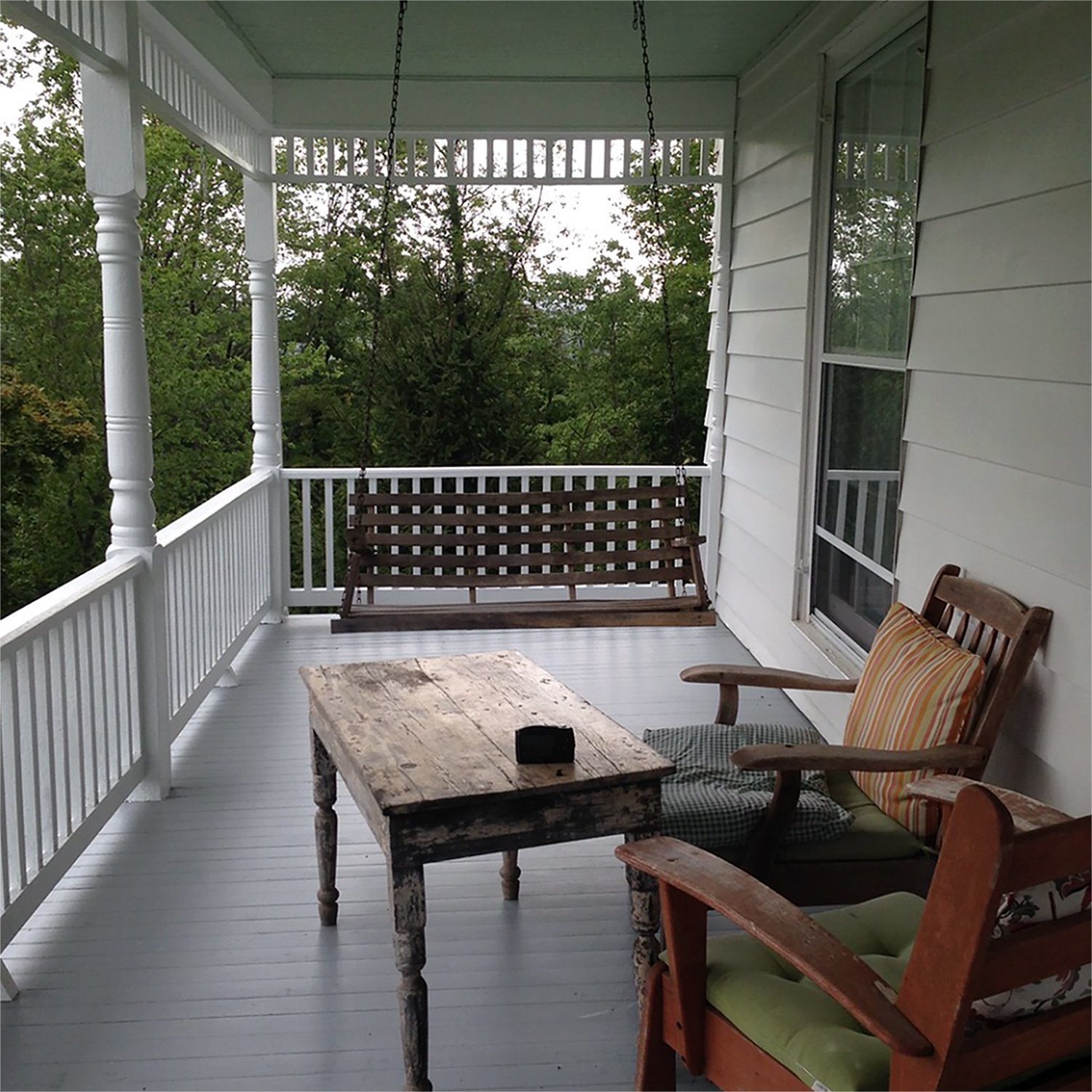
We were sitting on the front porch one night and…
Courtney had just built a front porch on her Bay Village home, so naturally, we were sitting on the porch, looking at the sky and talking about life. That’s when Courtney hatched the idea to collect essays about the difference front porches make for kids and neighborhoods, and how they foster a real sense of community.
All I could think was, “No! Not another book!” But the idea grew on me because Courtney was right. When your neighborhood is full of front porches, you get to know your neighbors, there are more opportunities for new connections, and you feel like everyone is looking out for each other.
So we launched this project, and now we’re counting on you to contribute a story.
Keep reading to learn how you can participate.

How to share your story.
You can submit your story right now. We’ll review your story and let you know when it will post online.
We can help you write your story.
You don’t have to be an experienced writer to tell your story. Join us for an upcoming Front Porch Stories class. They’re free. We’ll help you with the basics, and you can pick the format that works best for you.
Contribute a story in any format.
Don’t worry. This isn’t an English Lit class. It’s an opportunity to share a great memory, so the rules are relaxed. Write an essay, make a video, create a mini graphic novel, or tell your story out loud.
Story formats
Short essays around 500 words are preferred.
Quick videos from 30 seconds to two minutes.
A five-minute story is ideal for live events.
Post a memory on our Facebook page.
Get creative and scrapbook, draw, or paint.
Tell your story through a collection of snapshots.
Submit a blog post to us!
Attend a live event.
Tips and strategies for writing your story
Six key elements of a front porch story.
Give your story structure.
Your front porch story might be a memory right now, or a brief anecdote. Give it a beginning, a middle, and an end to make it a story. It can be a very brief story, but this 1-2-3 format provides structure and is the first building block you’ll need to turn a memory into something more.
Set the stakes, set the scene.
Tell us what can be gained or lost in your story by setting the takes, then bring your story to life by appealing to the senses. Describe sights, sounds, and scents to immerse us deeper into the setting. These don’t have to be long descriptions, but small details engage your reader by activating their senses and help you hold their interest.
Create memorable characters.
Neighbors seen and heard from your front porch stand out for a reason. Describe them and help us hear the way they talked so that we can develop a vivid picture of them in our minds. Your character portraits help move your story forward and add essential color.
For your hook, use the power of three.
Identify the central theme of your story and reference it three times. This is your “hook”, the reason you’re telling the story. Find a way to reference it three times in your story to provide an anchor and keep the momentum moving forward as your story progresses.
Now shave it all down.
Front porch stories are relatively short, so as you work through your draft, try to find ways to minimize word count while maximizing impact. Eliminate a longer phrase with one decisive word, or remove tangential elements that aren’t directly related to your story.
Give your story meaning.
There is a reason this story is sticking with you. Dig into it to discover the meaning behind your story. Usually, it’s an emotion, or a transitional moment that changed you. It might represent something you feel vulnerable about, but be brave and share it. Your reader will thank you.